INDUSTRY:
DIGITAL EXPERIENCE
CLIENT:
MSQ DX
YEAR:
2026
ROLE:
LEAD EXPERIENCE DESIGNER & CREATIVE STRATEGIST

MSQ DX Web Experience
overview.
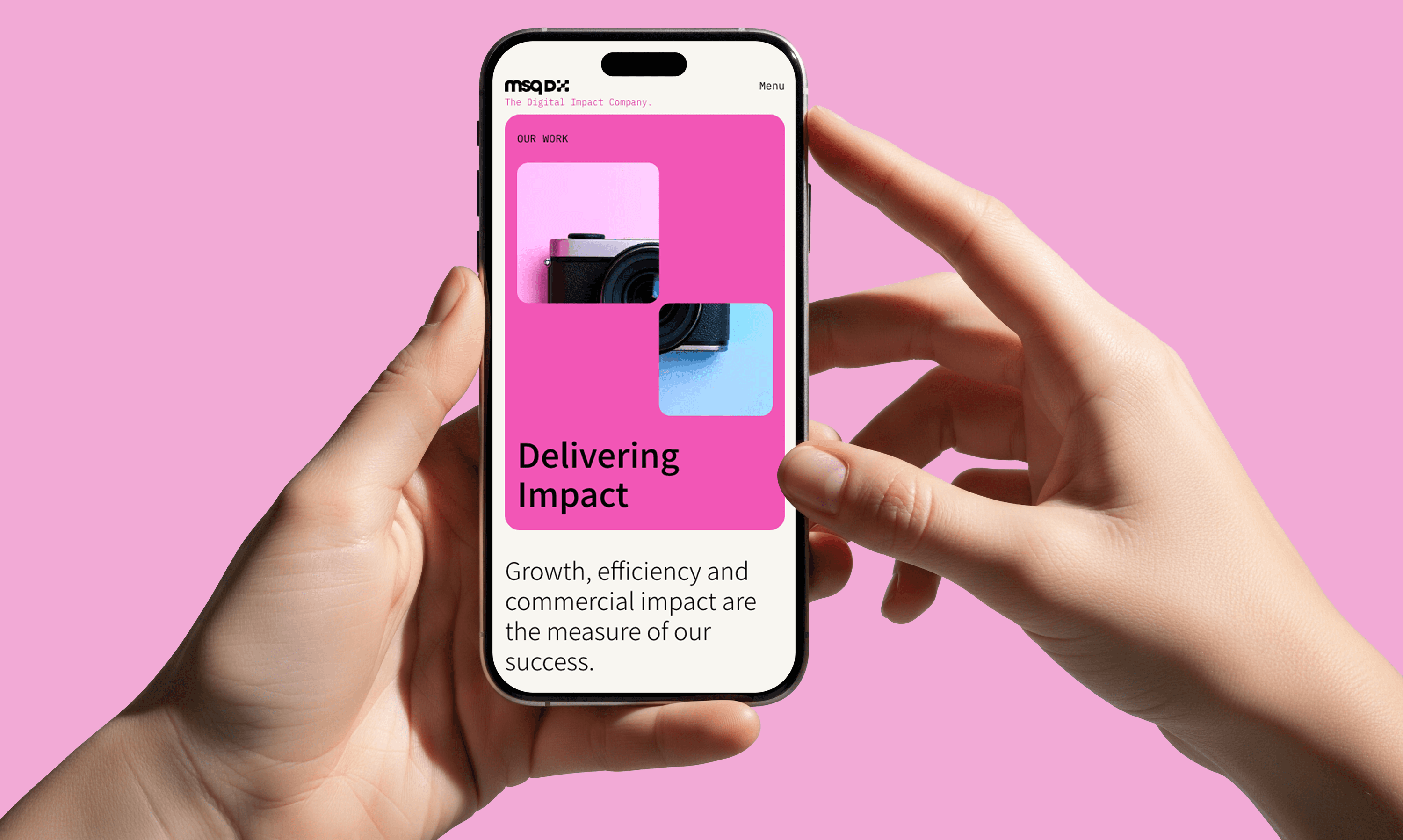
When three established digital agencies - MMT Digital, 26 DX, and UDG - merged under the MSQ Group umbrella to form MSQ DX, the brief went well beyond consolidating three visual identities into one. This was a full strategic repositioning: the creation of a new market category, expressed through a single, defining idea, MSQ DX as The Digital Impact Company. That phrase needed to do serious work. It had to distinguish the agency from a crowded field of digital consultancies, speak directly to enterprise buyers who measure everything against commercial outcomes, and hold up as a coherent creative platform across every surface the brand would occupy. The existing digital presences were fragmented and incompatible; the new website had to arrive fully formed, signalling that this merger had produced something with genuine conviction and direction. The strategic opportunity was clear, and so were the stakes.
challenge.
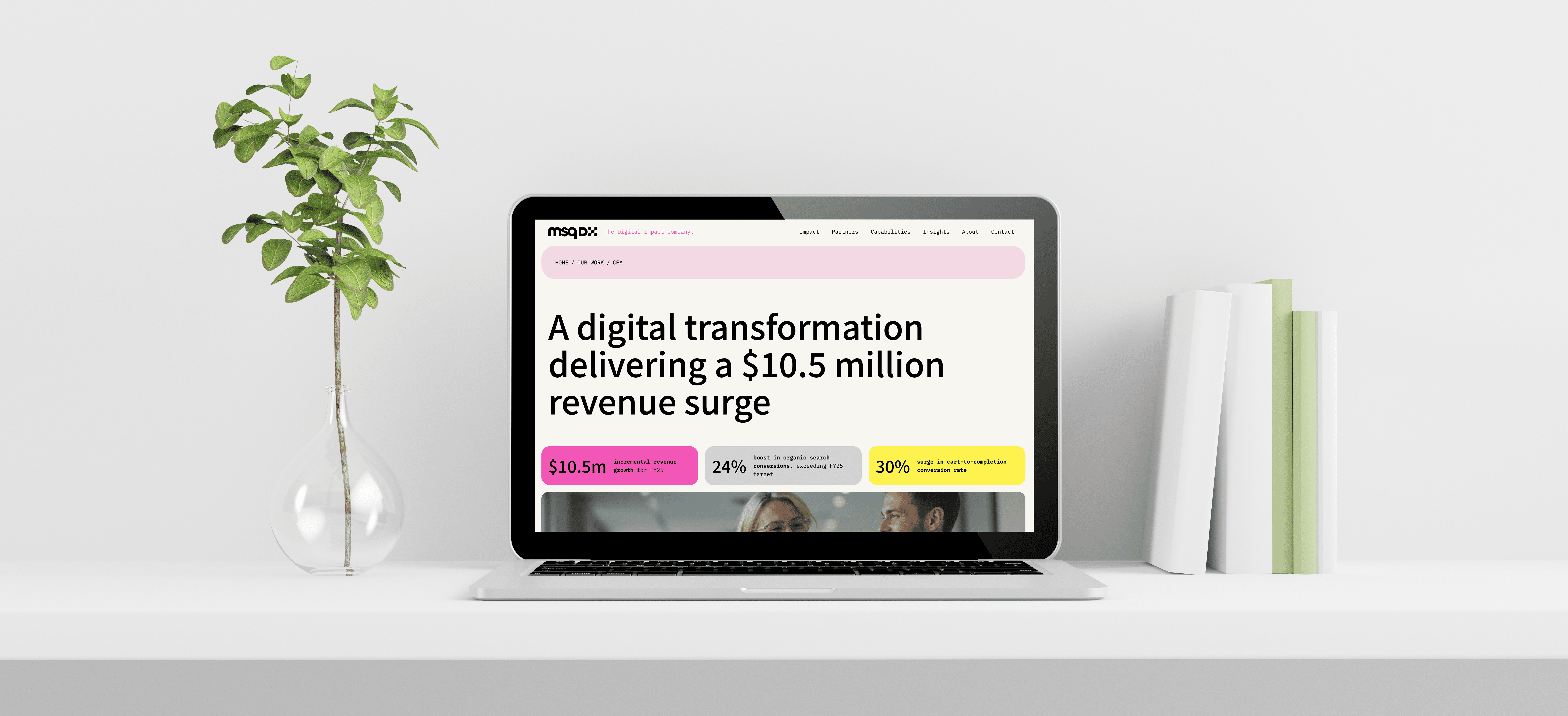
The ambition here wasn't simply to unify three agencies; it was to reposition. Declaring yourself The Digital Impact Company is a bold claim, and every design decision needed to substantiate it. The risk of landing somewhere generic was just as real as the risk of overclaiming; enterprise buyers read through positioning that isn't backed by visible evidence of capability.
The constraints compounded the difficulty. A hard launch deadline left limited runway for extended discovery or stakeholder alignment, while content ownership sat across three teams with different levels of digital maturity. Multilingual support, scalable content architecture, and integration with the MSQ Group's wider ecosystem meant design and development had to move in genuine lockstep throughout.
my role.
I led the project end-to-end as experience design lead and creative strategist, from initial positioning workshops through to QA and launch. That meant shaping the brand framework, facilitating alignment across three legacy businesses, and translating competing perspectives into a creative direction everyone could commit to.
On the execution side, I designed the full responsive website, produced the digital brand guidelines, and worked directly with development throughout build. I also embedded AI-assisted workflows into the process — generative layout exploration, automated asset preparation, prompt-driven copy iteration, not as novelty, but as a deliberate accelerant for a project with no room for wasted cycles.

approach.
I opened with structured discovery sessions across all three legacy agencies, using jobs-to-be-done framing to surface what was genuinely differentiating beneath the positioning language. The insight that MSQ DX uniquely connects experience strategy to measurable business outcomes became the foundation for The Digital Impact Company and the test for every design decision that followed.
With that platform established, I developed the visual identity and information architecture in parallel. The site needed to serve multiple audiences without fragmenting:
Prospective clients - proof of capability and commercial impact surfaced quickly
Talent - culture, values, and the shape of the work
Press and partners - context, scale, and group positioning
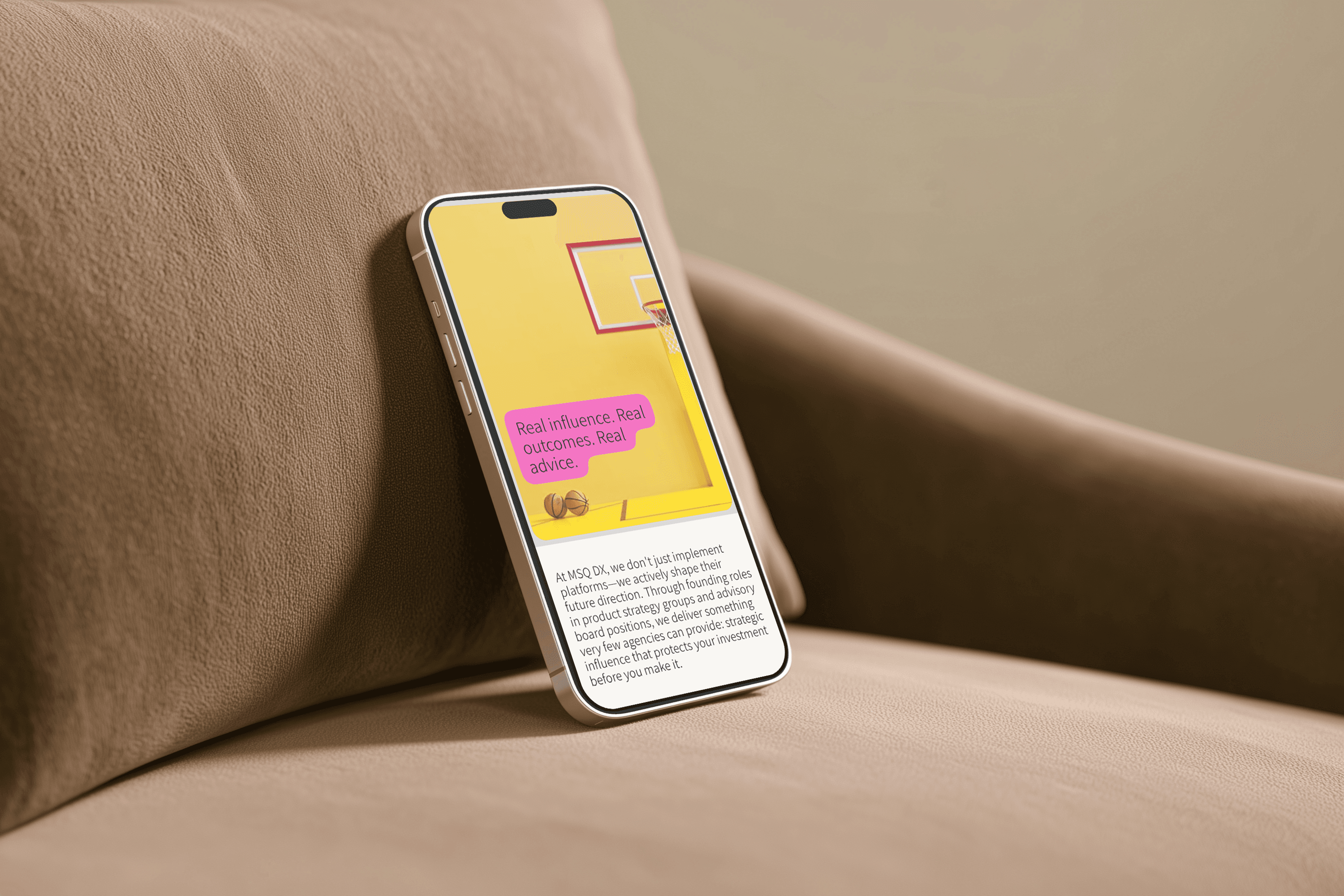
I resolved this through progressive disclosure: a homepage that leads with ambition, with each subsequent layer adding depth and evidence. The design language, restrained typography, deliberate negative space, and a calibrated motion vocabulary were built to signal expertise without performing it.
The component library was built token-first, with reuse and governance prioritised from day one rather than retrofitted. AI tools accelerated this phase meaningfully: generative layout exploration pressure-tested compositional directions before detailed design began, and automated asset workflows maintained consistency across responsive variants. The development handoff was structured around a living specification, annotated components, interaction states, and responsive behaviour documented to eliminate ambiguity at build.
outcome.
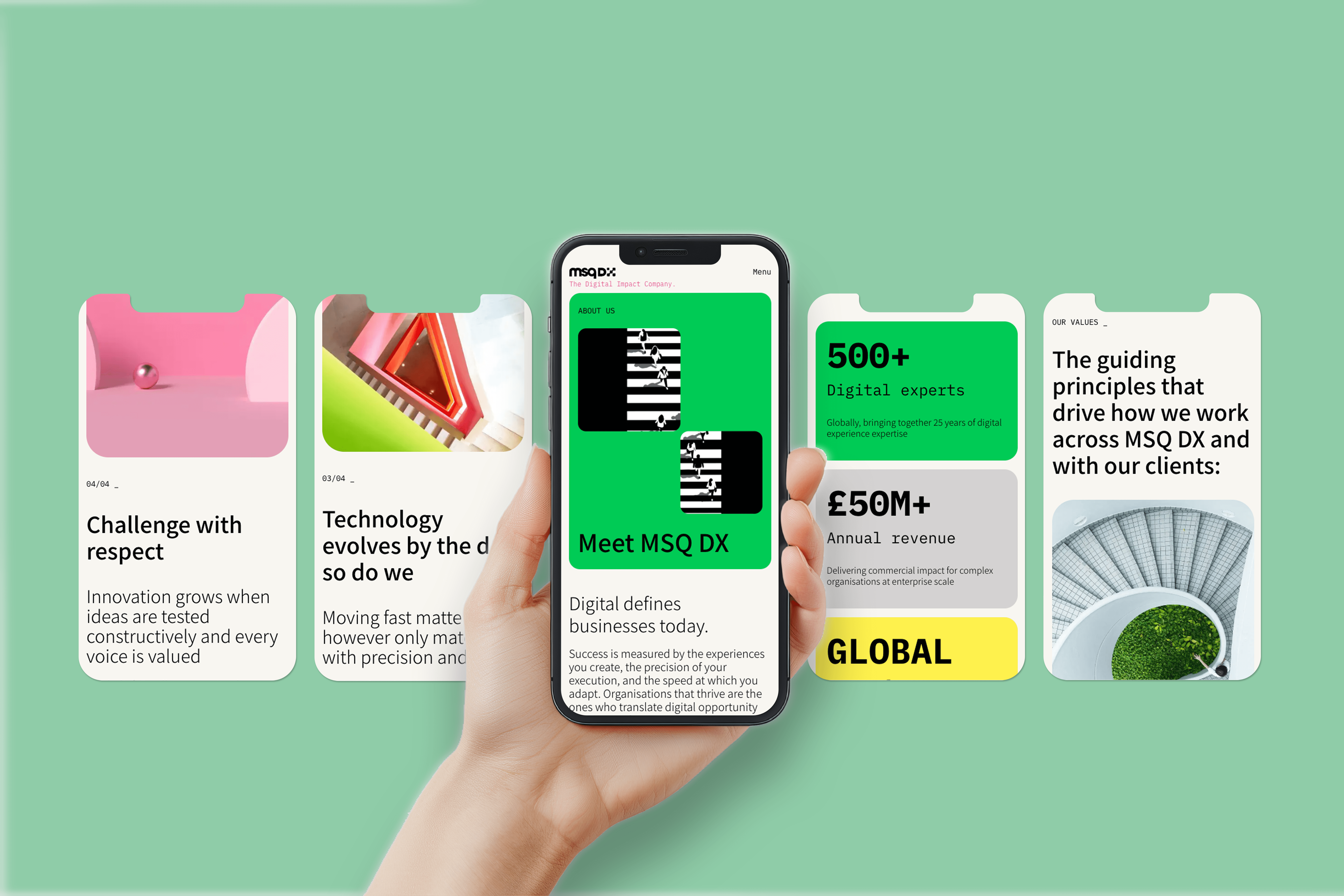
What launched felt like a confident, established agency, not a merger in progress. The digital brand guidelines gave content and marketing teams an immediately usable system: coherent enough to hold, flexible enough to scale without requiring design intervention on every update. Fast internal adoption was the clearest signal it was well-calibrated.
The AI-assisted workflows compressed what would typically be a sequential process into a more parallel one, and the gain wasn't just velocity. It freed up bandwidth for the decisions that required genuine judgment: the strategic calls, the creative risk, the calibration of tone that separates considered design from merely competent execution.
The site gave The Digital Impact Company positioning a home worthy of its ambition, and set the template, structurally and culturally, for how design and AI workflows can coexist in a fast-moving agency environment.

reflection.
The challenge with a merger project is that everyone arrives with legitimate pride in what they've built. Your job isn't to erase that, it's to find the thread that connects it all and pull it into something new. What I'm most satisfied with here is that 'The Digital Impact Company' didn't arrive as a slogan handed down from a strategy deck; it emerged from listening, and the design earned it.